채널A 종합뉴스 2015.06.09
Month: February 2016
‘아이언맨폰’ 4천만 원 낙찰
채널A 종합뉴스2015.05.28
유통 극장가 ‘활기’
채널A 종합뉴스 2015.06.27
“참담한 심정..의료진 헌신”
채널A 종합뉴스 2015.06.23
발길 끊는 유커
채널A종합뉴스 2015.06.15
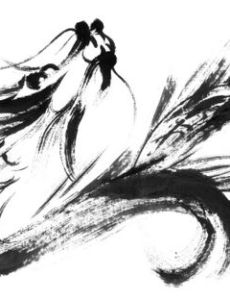
The Wise Dragon
Working at the office of education was boring. People call us, serving in public office instead of in the army, a “Public interest service personnel.” I did such a simple work like typing and filing documents or planting trees around the office. Twice a week, I could handle with some electronic equipment in auditorium for events, controlling microphone volume and light levels or videotaping guest speakers’ lecture.
Once I was carrying some heavy furniture while preparing for events as usual, I had a backache. My doctor recommended me to swim or do Yoga to relieve the pain. Fortunately, there was a yoga center near the office, and I visited there. However, what made me surprised was the fact that the instructors were Buddhist monks. It was a sort of mission as well as a yoga center. Those monks taught people how to meditate and Buddhist lessons. I spent whole two years steeping myself in meditation and Buddha’s teaching. My master gave me a Buddhist name, 智龍, Ji-Ryong, which means the wise dragon in English. When I was lost in meditation, distracting thought went away, and I was able to purify my mind.
It was not easy to be in a complete state of serene mind while I sat with my legs crossed. As I closed my eyes, all kinds of thoughts came across my mind. The more I tried to get the thoughts out of my mind, the more agitated I became. According to the instruction of my master, I just left the matters as they were, and they just faded away little by little.
I found the ultimate peace from the meditation, and it was a condition of my mind brought about by a serenity of my soul. Then, I realized that happiness does not come from possessing materials, but it does from being free from unnecessary things in my life.
Military Service
Finishing my second year at college, I applied two years’ leave of absence to school to complete my military service. All male citizens of the Republic of Korea are required to serve in the military or in the public offices except the challenged.
I passed physical examination except an optometry because of my poor sight, so I was assigned to the office of education. But, I still needed to have four-week training at an army camp before I started working at Haeundae office of education. Without any interaction with the world outside of the camp, life in the training center was physically demanding but worthwhile. Fifty new recruits in a platoon had to stay altogether in a big room for four weeks. There had been too many complaints from people who have diverse demographic backgrounds when it comes to education and profession. Impressive was the fact that three of them were mobs whose backs were covered in tattoos of dragon. We were obligated to relieve sentry every night, but I was exempt, as assigned as a platoon leader owing to my looking good handwriting. Meanwhile, we received gunnery exercise, guerilla training, and 60 km march at night. The worst thing was the CBR, Chemical, biology, and radiology, training. Standing in a room saturated with gas, we had to sing military songs under the drill sergeant’s command. In about ten minutes, as soon as I got out of the room, my eyes stung and they watered, and my nose ceaselessly ran. It was like a trip to hell and back. At the end of the training, fifty of us swelled with self-confidence and comradeship. We were soldiers.

The Enlightenment
Next year, I entered into Hankuk University of Foreign Studies and dreamed of such a romantic campus life. It was literally just a dream. My seniors by a year or two years welcomed my peers and me, new freshmen, and we hung out altogether and drank. It seemed that we wanted to get compensated by hard work during 12 years of study, and we always idled our time away as busy as a hen and one chicken. All the students in my department drank, danced and sang, as we skipped some classes despite expensive tuition. While thinking that this would go wrong, I could not manage to get out of the life because I was afraid of being leaving out alone from my peer group. So, I just followed my friends. Toward the end of the first semester, I felt like I would not let my life go wrong any more and decided to stop wasting my precious time. Then, I left my frolicking days behind for a library and started reading books.
I found a book by chance. It was a motivational personal development and self-help book entitled, “Think and Grow Rich,” written by Napoleon Hill. The author interviewed Andrew Carnegie and was inspired by Mr. Carnegie’s law of success. After that, he studied the characteristics of a large number of individuals who achieved great wealth during their lifetimes. And, in the book he introduced 16 laws of success, which can be applied to anyone through autosuggestion. At the time, I was absolutely riveted by the story of the book and chewed over the lessons in my mind. It was the moment of enlightenment. I was shocked that I found out the truth I did not know and made a resolution to live my way although it would be a solitary life.

Dead Poets Society
Throughout my school years, I used to be such a model student with a shy face. I was silent and hardly scolded by teachers. Attending Dae-cheon Middle School, I had a routine daily life, playing basketball after school and studying at home. I kept doing both types of writing: poetry and essay. Sometimes I wrote a logical exposition of my views on political issues. Fortunately, I won many prizes in writing contests in my school. When I moved to Haeundae, I had to part with my old friends and entered into Haeundae High School.

During three years in high school, I received a completely standardized education. I think the most representative place where the survival of the fittest rules is a Korean high school. All the students have to stay and study at school between seven in the morning and 11 every night. After school, most of them go to other private educational institutions to keep studying. Regardless of an individual aptitude, everyone has to take the same courses and is graded according to the number of correct answers to the multiple-choice questions. And, they are ordered from the top to the bottom depending on the result of the test. Also, when learning literature, they are not allowed to appreciate works or interpret authors’ thoughts on writings by their own mind. Instead, they need to memorize what a literature teacher explains about the works to prepare for the College Scholastic Ability Test, which is a critical exam to get into a college. This weird education system causes a few students to feel extremely ashamed and attempt suicide.
In summer five months before the CSAT, as a representative, I took part in a big wiring contest held at Seoul National University, the most prestigious college in Korea. When leaving for Seoul from Busan with the encouragement of principal, I was certain of winning a prize and getting into the college through a special screening. My guess was wrong. It was the largest national contest, and a great many of students good at writing participated in the contest. A proverb, “A big frog in a small pond” suddenly came home to my heart. I returned to Busan empty-handed, and focused on the CSAT.
Lotte of Victory
There was an incident, which attracted all the Busan citizens in front of the TV to watch a baseball game. During the Korean Series, the final of the Korean Baseball League, in 1992, Lotte Giants fans will never forget the moment the team became a champion. (As far as I know, in the world there are three Giants teams: San Francisco, Tokyo and Busan.) At that time, Jongseok Yeom, a super rookie, showed a perfect pitch, striking out many batters in a row. His outstanding performance overwhelmed and kept the opposing team’s bats silent. As the game was still going on even though live broadcast was interrupted by the regular broadcast schedule, people started turning on a radio to listen to a description of the ball game. Everyone heard the voice of a sportscaster and a commentator with breathless attention.
Whenever Giants player made a hit or a score, the crowd just went wild. Busan citizen’s passion for baseball is the same now as in old times. People who once watched a Giants’ game in Jamsil or Sajik stadium might fully agree with me. When their players are at bat, the Giants fans cheer by doing the waves and sing the songs for each player till they shout themselves hoarse. Sometimes this makes the burden too heavy for players, and results in poor performance at home. For example, a couple of fans, sitting near the dugout, give a yell to players.
“Are you drunk?” “Do you think you deserve the batter Number 4.?
Without showing good performance, they would be humiliated, catching a scolding from their fans’ boos and hisses. But, though it sounds ironic, their tough talk is actually affectionate advice and a message of support. In fact, Giants fans enjoy a game regardless of results of the game. They made a new record of the greatest number of spectators around the stadium amidst poor performance. This is because all the fans’ hearts cheer for players. They just want players to take a full swing self-confidently.
There was a political aim behind the establishment of the Korean baseball league in 1982. Doohwan Chun, a military dictator in 1980s, needed some entertainment to avert public opinion from the attention of politics after he seized power, mounting a coup. As a part of the 3S policies: Screen, Sex and Sports, he founded the Korea Baseball Organization. His prediction hit the nail on the head, and people started cheering their home teams. This led to the split of political sentiment into two different directions: Young-nam area and Ho-nam area. Though it was launched with a specific political purpose, Korean baseball fans are enthusiastic because players perform fairly, demonstrating good sportsmanship unlike politicians.
 June-Young Lee