
When my father came back to work, he was not appointed back to the newsroom at first. He had to produce and deliver Children’s Literature, a magazine for children, published by MBC in Busan. When working there, he first met Ik-chen Bae and Yong Seon, children’s writers. He brought me the magazine monthly, so I could read a lot for free. It was interesting that the magazine was full of writings and illustrations suited to children.
A year later in 1986, he made a new start in the newsroom with newscasts on both TV and radio. In 1991, promoted to an assistant manager from an ordinary reporter, he got so excited that he called my mother early at dawn in Korea from Thailand while receiving congratulations from city councilors and other journalists. He constantly worked hard and got promoted to a director of the newsroom in 2000 and an executive in 2001.
“ I am a very happy person. I joined MBC twice and got severance pay three times when I got dismissed in 1980, retired at the regular retirement age in 2001, and completed a three-year executive term. Therefore, I have nothing more to wish for.” This was a part of his retirement speech in his ceremony.
I am proud of my father. When young, I was amazed at my father, an anchorman on TV, fascinated by his passion to rush to the scene of the accident to deliver the news in all winds and weathers. As I knew that he was discharged because of his active reports and dedication to the freedom of journalism in 1980, his brave conviction was admirable. Because growing up while always looking at him, whenever seeing injustice, I am upset and speak against it, and tried to do my best for my work. My father has lived as a journalist pursuing to clear up the truth. I respect my father.
One day I found a letter my father wrote to me when arranging some documents at home.
To June-Young,
How have you been doing? I wonder if you eat well. When I see you studying hard in school and library to go study abroad, I am proud of you but feel bad that you look tired. As you have wanted to do so, I wish you see the fruit of your effort. I am sure of your achievement.
However, never let overwork ruin your health. It will be impossible to achieve a goal if you lose your health. Accordingly, eat well, do exercise sometimes, and have time to relax and keep your composure. The anniversary of your grandfather’s death is coming. After you leave for the U.S. to study, then it will take long time to meet each other, so come home and visit at your grandfather’s grave.
Even though your sister is coming back to Korea, it is a pity that you are going to leave soon this time. Call your mom and sister frequently. I am sending you a bank statement first. Let me know if there is more document to bring to get a visa.
From your father
- 6. 12
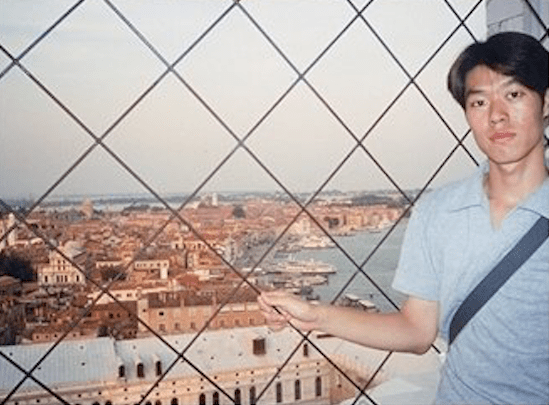 I fully enjoyed the beautiful scenery in Europe. While Berlin had a distinct modern atmosphere with brand-new buildings, Prague was full of antique flavors with ancient castles, to such an extent to create an illusion that I was in medieval times. Among the European cities I visited, Paris was in harmony with the merits of Prague and Belin. It keeps the balance between old European history and modernized ambience in terms of the art and culture of the city. The most impressive city was Venice, which was surrounded by water. Everything was different. A ferryboat was called a water-bus or a water-taxi. I was enraptured over the exotic aura emanating from the skies being aglow with the setting sun. Watching the sunset on a ferryboat, I felt my mental and physical exhaustion just fade away. It was quite easy to know the reason many artists visit Venice and live there after just staying there for a couple of days.

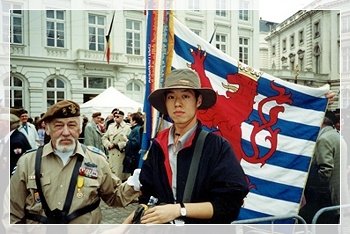 a the Euro Line, and reached Brussels in Belgium. At that time, there was a parade to celebrate Veterans’ day, and I saw a group with a Korean national flag. Gladly looking at them, I took some pictures of them, and some people in the group spoke to me and asked if I was Korean. Then, they told me that they participated in the Korean War in 1950s and started singing “Arirang,” which is a Korean traditional elegy. In fact, the song expresses “Han,” the unique emotion of Koreans, which is similar with the feeling of sorrow or lamentation but cannot be exactly explained or translated in English. While singing the song, they held my hands firmly and were completely moved to tears. It seemed that they understood the feeling only Koreans have in the song’s lyrics. I was really grateful of their courage and sacrifices fighting for my country and bowed down in deference to them.
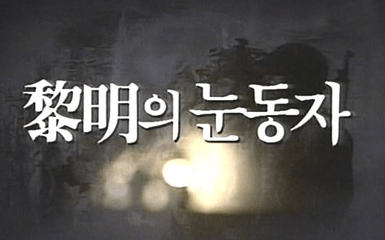 The teaser that showed a tear dropping down from Dae-chi’s knife-scarred eye is still vivid in my memory. I was so young that I could not understand the characters’ fickleness of fortune, but I was quite bewitched by scenes in which bullets zipped through the air amidst a war or Japanese soldiers chased Harim out of the prison. Afterwards, when broadcast again on a cable channel in 10 years, it did not fail to fascinate me, and I could fully understand its story. It ran amidst rising popularity with wonderful directing, solid story lines, actors’ superb performances and even perfect music.
 June-Young Lee