The Wise Dragon

Working at the office of education was boring. People call us, serving in public office instead of in the army, a “Public interest service personnel.” I did such a simple work like typing and filing documents or planting trees around the office. Twice a week, I could handle with some electronic equipment in auditorium for events, controlling microphone volume and light levels or videotaping guest speakers’ lecture.

Once I was carrying some heavy furniture while preparing for events as usual, I had a backache. My doctor recommended me to swim or do Yoga to relieve the pain. Fortunately, there was a yoga center near the office, and I visited there. However, what made me surprised was the fact that the instructors were Buddhist monks. It was a sort of mission as well as a yoga center. Those monks taught people how to meditate and Buddhist lessons. I spent whole two years steeping myself in meditation and Buddha’s teaching. My master gave me a Buddhist name, 智龍, Ji-Ryong, which means the wise dragon in English. When I was lost in meditation, distracting thought went away, and I was able to purify my mind.

It was not easy to be in a complete state of serene mind while I sat with my legs crossed. As I closed my eyes, all kinds of thoughts came across my mind. The more I tried to get the thoughts out of my mind, the more agitated I became. According to the instruction of my master, I just left the matters as they were, and they just faded away little by little.

I found the ultimate peace from the meditation, and it was a condition of my mind brought about by a serenity of my soul. Then, I realized that happiness does not come from possessing materials, but it does from being free from unnecessary things in my life.


Military Service

Finishing my second year at college, I applied two years’ leave of absence to school to complete my military service. All male citizens of the Republic of Korea are required to serve in the military or in the public offices except the challenged.

I passed physical examination except an optometry because of my poor sight, so I was assigned to the office of education. But, I still needed to have four-week training at an army camp before I started working at Haeundae office of education. Without any interaction with the world outside of the camp, life in the training center was physically demanding but worthwhile. Fifty new recruits in a platoon had to stay altogether in a big room for four weeks. There had been too many complaints from people who have diverse demographic backgrounds when it comes to education and profession. Impressive was the fact that three of them were mobs whose backs were covered in tattoos of dragon. We were obligated to relieve sentry every night, but I was exempt, as assigned as a platoon leader owing to my looking good handwriting. Meanwhile, we received gunnery exercise, guerilla training, and 60 km march at night. The worst thing was the CBR, Chemical, biology, and radiology, training. Standing in a room saturated with gas, we had to sing military songs under the drill sergeant’s command. In about ten minutes, as soon as I got out of the room, my eyes stung and they watered, and my nose ceaselessly ran. It was like a trip to hell and back. At the end of the training, fifty of us swelled with self-confidence and comradeship. We were soldiers.


Dead Poets Society

Throughout my school years, I used to be such a model student with a shy face. I was silent and hardly scolded by teachers. Attending Dae-cheon Middle School, I had a routine daily life, playing basketball after school and studying at home. I kept doing both types of writing: poetry and essay. Sometimes I wrote a logical exposition of my views on political issues. Fortunately, I won many prizes in writing contests in my school. When I moved to Haeundae, I had to part with my old friends and entered into Haeundae High School.

죽은 시인의 사회

During three years in high school, I received a completely standardized education. I think the most representative place where the survival of the fittest rules is a Korean high school. All the students have to stay and study at school between seven in the morning and 11 every night. After school, most of them go to other private educational institutions to keep studying. Regardless of an individual aptitude, everyone has to take the same courses and is graded according to the number of correct answers to the multiple-choice questions. And, they are ordered from the top to the bottom depending on the result of the test. Also, when learning literature, they are not allowed to appreciate works or interpret authors’ thoughts on writings by their own mind. Instead, they need to memorize what a literature teacher explains about the works to prepare for the College Scholastic Ability Test, which is a critical exam to get into a college. This weird education system causes a few students to feel extremely ashamed and attempt suicide.

In summer five months before the CSAT, as a representative, I took part in a big wiring contest held at Seoul National University, the most prestigious college in Korea. When leaving for Seoul from Busan with the encouragement of principal, I was certain of winning a prize and getting into the college through a special screening. My guess was wrong. It was the largest national contest, and a great many of students good at writing participated in the contest. A proverb, “A big frog in a small pond” suddenly came home to my heart. I returned to Busan empty-handed, and focused on the CSAT.

Lotte of Victory


There was an incident, which attracted all the Busan citizens in front of the TV to watch a baseball game. During the Korean Series, the final of the Korean Baseball League, in 1992, Lotte Giants fans will never forget the moment the team became a champion. (As far as I know, in the world there are three Giants teams: San Francisco, Tokyo and Busan.) At that time, Jongseok Yeom, a super rookie, showed a perfect pitch, striking out many batters in a row. His outstanding performance overwhelmed and kept the opposing team’s bats silent. As the game was still going on even though live broadcast was interrupted by the regular broadcast schedule, people started turning on a radio to listen to a description of the ball game. Everyone heard the voice of a sportscaster and a commentator with breathless attention.

Whenever Giants player made a hit or a score, the crowd just went wild. Busan citizen’s passion for baseball is the same now as in old times. People who once watched a Giants’ game in Jamsil or Sajik stadium might fully agree with me. When their players are at bat, the Giants fans cheer by doing the waves and sing the songs for each player till they shout themselves hoarse. Sometimes this makes the burden too heavy for players, and results in poor performance at home. For example, a couple of fans, sitting near the dugout, give a yell to players.

“Are you drunk?” “Do you think you deserve the batter Number 4.?

Without showing good performance, they would be humiliated, catching a scolding from their fans’ boos and hisses. But, though it sounds ironic, their tough talk is actually affectionate advice and a message of support. In fact, Giants fans enjoy a game regardless of results of the game. They made a new record of the greatest number of spectators around the stadium amidst poor performance. This is because all the fans’ hearts cheer for players. They just want players to take a full swing self-confidently.

There was a political aim behind the establishment of the Korean baseball league in 1982. Doohwan Chun, a military dictator in 1980s, needed some entertainment to avert public opinion from the attention of politics after he seized power, mounting a coup. As a part of the 3S policies: Screen, Sex and Sports, he founded the Korea Baseball Organization. His prediction hit the nail on the head, and people started cheering their home teams. This led to the split of political sentiment into two different directions: Young-nam area and Ho-nam area. Though it was launched with a specific political purpose, Korean baseball fans are enthusiastic because players perform fairly, demonstrating good sportsmanship unlike politicians.


Children’s Literature

When my father came back to work, he was not appointed back to the newsroom at first. He had to produce and deliver Children’s Literature, a magazine for children, published by MBC in Busan. When working there, he first met Ik-chen Bae and Yong Seon, children’s writers. He brought me the magazine monthly, so I could read a lot for free. It was interesting that the magazine was full of writings and illustrations suited to children.

A year later in 1986, he made a new start in the newsroom with newscasts on both TV and radio. In 1991, promoted to an assistant manager from an ordinary reporter, he got so excited that he called my mother early at dawn in Korea from Thailand while receiving congratulations from city councilors and other journalists. He constantly worked hard and got promoted to a director of the newsroom in 2000 and an executive in 2001.

“ I am a very happy person. I joined MBC twice and got severance pay three times when I got dismissed in 1980, retired at the regular retirement age in 2001, and completed a three-year executive term. Therefore, I have nothing more to wish for.” This was a part of his retirement speech in his ceremony.

I am proud of my father. When young, I was amazed at my father, an anchorman on TV, fascinated by his passion to rush to the scene of the accident to deliver the news in all winds and weathers. As I knew that he was discharged because of his active reports and dedication to the freedom of journalism in 1980, his brave conviction was admirable. Because growing up while always looking at him, whenever seeing injustice, I am upset and speak against it, and tried to do my best for my work. My father has lived as a journalist pursuing to clear up the truth. I respect my father.

One day I found a letter my father wrote to me when arranging some documents at home.


To June-Young,


How have you been doing? I wonder if you eat well. When I see you studying hard in school and library to go study abroad, I am proud of you but feel bad that you look tired. As you have wanted to do so, I wish you see the fruit of your effort. I am sure of your achievement.

However, never let overwork ruin your health. It will be impossible to achieve a goal if you lose your health. Accordingly, eat well, do exercise sometimes, and have time to relax and keep your composure. The anniversary of your grandfather’s death is coming. After you leave for the U.S. to study, then it will take long time to meet each other, so come home and visit at your grandfather’s grave.

Even though your sister is coming back to Korea, it is a pity that you are going to leave soon this time. Call your mom and sister frequently. I am sending you a bank statement first. Let me know if there is more document to bring to get a visa.


From your father

  1. 6. 12


The White Piano

My family moved around a lot. Perhaps, in my retrospect, we did seven or eight times. According to my parents, since they got married, my family has moved 11 times. The reason is that our family livelihood was jeopardized once my father lost his job. It all happened when I was little, so I do not remember how severely poor we were. Actually, as time went by, we continuously moved into newer, bigger houses, and consequently, I never felt uncomfortable as growing up. But, at the age of five, my older sister had to watch helplessly as unknown people taking her white piano out of her room. She asked,

“Why are they taking my piano?” “Yoo-Jeong, the piano is broken, and they need to fix it,”

answered my mother instead of giving her detailed account.

Graduating from Chung-Ang University with B.A in Journalism, in 1974, my father joined MBC, one of the three major broadcasting stations with SBS and KBS in Korea. In 1980s, Korea was in a state of disorder. On October, 26, 1979, the former president Chung-hee Park was assassinated by Jae-kyu Kim, his right arm as well as the director of KCIA, Korean Central Intelligence Agency. The following year, Doohwan Chun, the military dictator came into power with a military coup on December 12th, which is more well-known as 12.12 among Koreans.

Under the dictatorship, freedom of speech was suppressed, and press of reports was controlled. Civilians started being outside on streets and revolted against military regime. On May 18th, 1980, a pro-democratic resistance movement firstly began in Gwangju, and it spread like wildfire over the country.

While all organs of public opinion were pressured, CBS, Christian Broadcasting System, and Dong-Ah Daily Newspaper were merged into KBS, Korea Broadcasting System. In Busan, my hometown, Kookje and Busan Daily Newspaper were amalgamated. In those days, Busan-Jin police office, my father’s news beat, was the largest official institute where newsmen from fifteen major media organizations were accredited for reporting. With Gap-Jee Cho, who was a journalist at Kookje Daily Newspaper, but later suddenly turned to conservative side, my father wrote a draft of the Journalists’ Declaration of Conscience. It was signed by journalists of the national press and published in the Association of Journalists Newspaper. Eventually, the military regime infringed on freedom of the press, and under the surveillance and command of KCIA, a great many reporters and writers got informed that they were fired. Some of them got divorced or committed suicide as suffered from the hardship of life. After radio news reports on August 11th, 1980, my father also got a letter of dismissal. Afterwards, in order to support family, he entered Dong-Yang Construction, a big company and worked there for a year, but he was discharged due to the supervision of KCIA. Then, he tried to continuously join a company but got dismissed as a result of his record. Hence, my parents were saddled with debts and could not help selling the white piano their daughter loved to buy rice and dry milk.

My mother needed to support our family during the time that my father took care of my sister and me at home. First, she gave piano lessons in music school. And, later she sold glassware made of crystal. She ran her business really well, but one day as the parent company went bankrupt, all the checks bounced like a scrap of paper. A wretched circumstance at the time attracted my parents to think about suicide.

The only place where they could lean on was church. She said they sought solace in religion, and decided they would endure any kind of suffering for my sister and me, listening to minister Pildo-Jeong’s sermon even though they did not go to church when young. As a matter of fact, my mother had totally different home background from my father’s. Unlike him, who grew up in poor family as the eldest son out of seven children, my mother spent her childhood in a wealthy family. Owned and managed a car factory in 1950s, my maternal grandfather was a successful businessman to such an extent as to have many imported cars such as Mercedes and Chevrolet. Thus, it was said that my mother’s family were adamantly opposed to the marriage. For that reason, I still dream of true love for my marriage although it is naturally acceptable to get a “suitable” match for one in terms of marriage.

The ties my mother had with a friend decisively had a great impact on my father resuming his seat. She helped my parents keep in touch with Young-Il Kim, a presidential secretary for civilian as well as her near relative. Among many journalists who were wrongfully dismissed from MBC, my father was the only one reinstated at the time. Till then, my mother’s sacrifice for the family was so great that it almost defies description. Though it was not a good idea economically, as soon as my father returned to his work and saved money, the first thing my parents bought was a white piano. It was the present from their heart for their daughter. The piano, not sounding good and already faded into beige by many years, is still in the corner of my sister’s room in Busan, keeping my family company down through the years we had moved seven times.


Beautiful Venice

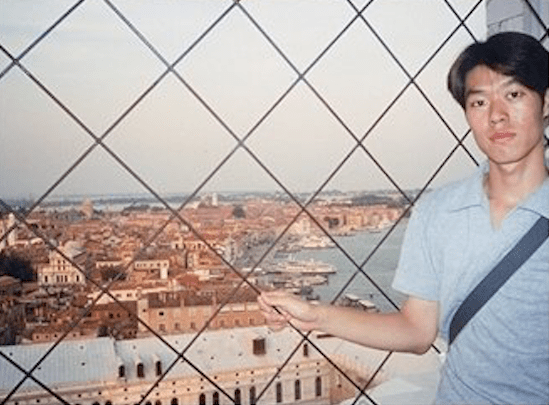
Screen Shot 2016-02-25 at 오전 10.52.48I fully enjoyed the beautiful scenery in Europe. While Berlin had a distinct modern atmosphere with brand-new buildings, Prague was full of antique flavors with ancient castles, to such an extent to create an illusion that I was in medieval times. Among the European cities I visited, Paris was in harmony with the merits of Prague and Belin. It keeps the balance between old European history and modernized ambience in terms of the art and culture of the city. The most impressive city was Venice, which was surrounded by water. Everything was different. A ferryboat was called a water-bus or a water-taxi. I was enraptured over the exotic aura emanating from the skies being aglow with the setting sun. Watching the sunset on a ferryboat, I felt my mental and physical exhaustion just fade away. It was quite easy to know the reason many artists visit Venice and live there after just staying there for a couple of days.


Apathy

To sightsee more Eastern Europe, I got on the train for Budapest, the capital of Hungary. Eastern European countries were under Communism before, so the atmosphere of cities looked strictly organized and systematic and the economy was not that good, but people looked very liberal now. In Budapest, as I quickly grew tired in the blazing sunshine, I went around in beach sandals after I taped my shoes on a string to my backpack. When stopping by a grocery store, I found out that somebody stole my shoes by cutting the strings attached to my bag. At the same time, I sympathized with the guy and felt sorry for myself, not aware of my shoes being stolen while wandering around the streets. From theat day, I had to get around in beach sandals till the end of my trip.

KOREA!

After I traveled through Italy, Austria, and Spain, I arrived in the Czech Republic. I was able to see a great many Korean backpackers on the train. All of them were heading for a soccer game between Korea and the Czech Republic, scheduled on August 15th, which is the Independence Day of Korea. As I reached the stadium, Red Devils, the cheering squad for Korean national soccer team, and Korean residents already filled seats up. The Stadium was already in wild excitement, and I was so excited about the prospect of seeing Guss Hidink, the head coach and Korean players. Several groups of police officers were deployed and enclosed the stadium for possible mayhem of hooligans. I met five backpackers there, and we planned some special performance before the game began. Six of us took off our shirts, and wrote six letters: K,O,R,E,A, and ! on each of our chests with lipstick we borrowed from a Korean female resident. I got the “O.” Accidently, we were captured by cameras of some Korean broadcast groups, who came over there to relay the game. Thinking as if we were pro-independence fighters, all of us yelled and sang songs to cheer the Korean national team until we were horse. The game result was 5-0. We lost. The Czech Republic already failed to move up to the next year’s World Cup finals. But, as though they wreaked their anger upon the Korean team, Czech players showed great performance behind the striking power of Jan Koller who is 6’7’’. I was so furious but cheered the players up.


1000 lira

I headed toward Italy by way of Belgium and Germany. In the train, I accidently met a couple of Korean travelers and got some information sharing trip stories. I think the real charm of traveling is to feel fresh, having new experiences with new people in new places, getting out of monotonously repetitive daily life. As leaving behind Korea two weeks ago, I enjoyed myself traveling alone. I walked toward the Coloseum as soon as I arrived in Rome. As it was described in lots of movies, the largest of the Roman Amphitheaters exuded an atmosphere of greatness and majesty the Roman Empire once had.

When I was about to leave there after I did sightseeing, some people all dressed in the Roman Empire costume came up to me. They suddenly grabbed my camera and started taking a picture of me with some of them. I thought that they provided visitors with this splendid service sponsored by a city government. But, after taking some photos, they asked me to pay for it. Now I am familiar with the tipping culture for street performance since I moved to San Francisco, which is famous for busking, but at that time I did not understand why they expected me to pay. Unwillingly, I gave them 1000 lira, but they began getting mad at me. (A lira was the unit of money used in Italy, but now it has been replaced by the euro.) They had every right to be pissed off because it was about fifty cents worth in those days. I could not afford to pay more as a hungry backpacker. After the five-minute of haggling over the tip, I got out of there with my camera.