클리어 프롭

클리어 프롭!

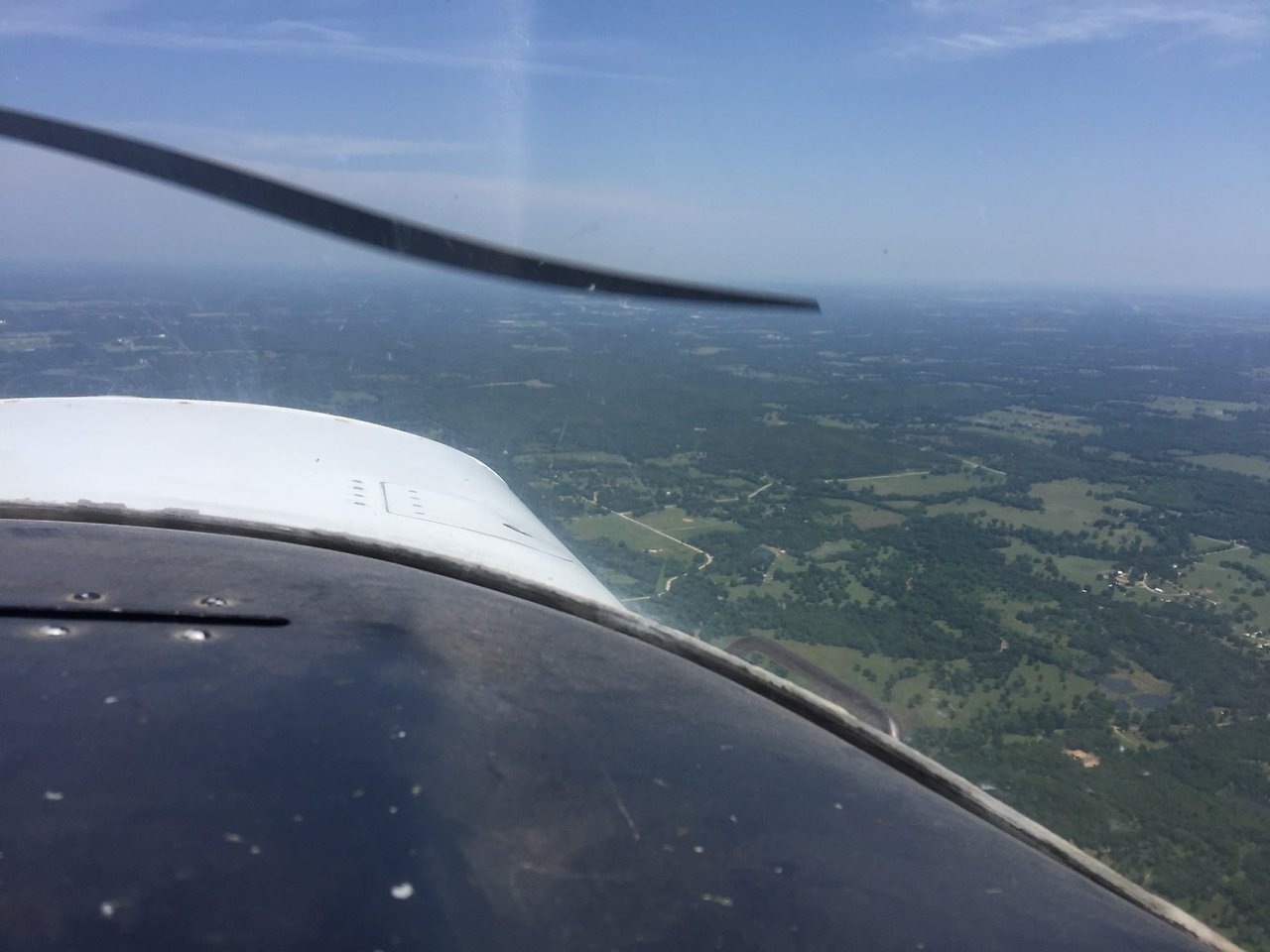
시동을 걸기 직전 창문을 열고 큰 소리로 외친다. 비행기 주변에 있는 사람들에게 엔진 작동을 알리는 말이다. 멈춰있던 비행기가 진동하며 움직이기 시작한다. 관제사의 이륙 허가를 받고 천천히 스로틀을 밀어 파워를 올리면 활주로를 달리던 비행기는 하늘로 날아오른다. 조종사의 능숙한 조작과 자연의 바람이 만나 1톤에 달하는 육중한 기계는 살아 움직이는 생물이 된다.

밤마다 같은 꿈을 꿨다. 새처럼 하늘을 날며 내가 살던 동네 곳곳을 내려다보는 꿈이었다. 어린 마음에 그 능력 하나면 세상 전부를 다 가진 기분이었다. 잠에서 깨면 눈을 감고 그대로 누운 채 꿈의 잔상을 떠올리며 행복에 젖어들었다.

꿈을 직접 느끼고 싶었다. 미국으로 떠났다. 1년 동안 비행학교에서 공부하고 훈련하면서 미국과 한국의 사업용 조종사 면허를 취득했다. 내게 남은 건 단순한 손바닥만 한 자격증이 아니다. 길을 걷다가도 눈 감고 뺨을 스치는 바람을 느끼다 보면 그때 그곳으로 돌아가 비행하는 나를 만난다.

Inflight weather advisories

There are 5 in-flight weather advisories that are forecast based on actual weather conditions.  

1. Convective sigmet [WST]

  • advises of weather that is convective in nature and is issued for every thunderstorms with hail greater than 3/4“, surface winds greater than 50 knots
  • tornadoes, embedded thunderstorms, lines of thunderstorms
  • thunderstorm producing precipitation
  • Convective sigmet also implies severe turbulence, icing, and low-level wind shear
  • valid for 2 hours 

2. Sigmet [WS]

  • advises of non-convective weather that is potentially hazardous to all aircrafts
  • issued for severe turbulence and icing not associated with convective activity, dust storms and sand storms reducing visibility below 3SM, and volcanic ash
  • valid for 4 hours 

3. Airmet [WA]

  • advises of weather that is lower in intensity
  • valid for 6 hours
  • there are 3 types of Airmet 

Sierra – IFR or mountain obscurations. 

Tango – moderate turbulence, sustained surface wind of 30 knots or greater,  and non-convective low-level wind shear. 

Zulu – moderate icing. 

4. CWA(Center Weather Advisories)

  • is issued on an unscheduled basis as supplementary information to an existing WA, WS, or WST
  • valid for 2 hours 

5. WW(Severe Weather Watch Bulletins) / AWW(Alert Weather Watch Bulletins)

  • issued in areas of severe thunderstorm or tornado activity
  • severe activity is defined by greater than 3/4“ hail, wind gusts greater than 50 knots
  • a tornado watch defines an area where possible tornado activity exists

Fog

Definition

  • a cloud that is on the surface
  • usually occurs when the temperature of air near the ground is cooled to the air’s dew point

Types of fogs

Radiation fog, image from PHAK 12-21
  • Radiation fog : On clear nights, with little to no wind, radiation fog develops. It usually forms in mountain valley. It occurs when the ground cools rapidly due to terrestrial radiation, and the surrounding air temperature reaches its dew point. 
  • Advection fog : When a layer of warm, moist air moves over a cold surface, advection fog occurs. Wind(up to 15knot) is required to form advection fog. It is common in coastal areas where sea breezes can blow the air over cooler landmasses.
  • Upslope fog : When moist, stable air is forced up sloping land features like a mountain range, upslope fog occurs. Wind is required to form it. 
  • Steam fog : When cold, dry air moves over warm water, steam fog occurs. Steam fog is common over bodies of water during the coldest times of the years. 
  • Ice fog : When the temperature s much below freezing and water vapor forms directly into ice crystals in cold weather, Ice fog occurs.  

Microburst

Defnition

a small-scale, intense downdraft that spreads outward in all directions from the downdraft center when reaching the surface

Effects of microburst wind, image from PHAK 12-17

Characteristics

  • especially dangerous during landing if the pilot has reduced power and lowered the nose in response to the headwind shear
  • leaves the aircraft in a nose-low, power-low configuration when the tailwind shear occurs, which makes recovery more difficult
  • can cause the airplane to stall or land short of the runway 

Thunderstorm

Definition

a local storm, always produced by a cumulonimbus cloud, and always accompanied by lightning and thunder, usually with strong gusts of wind, heavy rain, and sometimes with hail. 

How to develop 

Unstable air, high moisture, and uplifting force are all required for thunderstorm to form  

3 stages of thunderstorm

Life cycle of thunderstorms, image from PHAK 12-28
  • Cumulus is marked by a large billowing clouds with extensive vertical development, which is caused by updrafts from surface heating, terrain, pressure system or fronts 
  • Mature is marked by the beginning of rain at the surface. During this stage, updrafts are at their maximum and extreme vertical shearing occurs between the updrafts and the cooler downdrafts following the precipitation 
  • Dissipating is marked by downdrafts. The cool downdrafts eventually terminate the uplifting forces. When the downdrafts end and the rain has stopped, this signifies the end of the dissipating stage

If a radar indicates thunderstorm activity, pilots should avoid the cells by at least 20 miles. 

Two different categories

  • Airmass TS is generally caused by surface heating (at desert or sea) 
  • Steady state TS is associated with weather systems and frontal movement 

Three principal types

  • Single cell (=ordinary cell thunderstorms) consists of only one cell. It easily circumnavigated by pilots except at night or when embedded in other clouds. Single cell thunderstorms are rare. Almost all thunderstorms are multi-celled.  
  • Multicell cluster and line consists of a cluster of cells at different stages of their life cycles. As the first cell matures, it is carried downwind, and a new cell forms upwind to take its place. A multicell may have a lifetime of several hours (or more), which makes it tougher to circumnavigate than a single-cell thunderstorm. May have supercells embedded within them.  
  • Supercell consists primarily of a single, quasi-steady rotating updraft that persists for an extended period of time. Updraft speeds may reach 9,000 fpm (100 knots). They may persist for many hours (or longer) and their size and persistence make them tough to circumnavigate.  

Hyperventilation

Definition

a state of carbon dioxide deficiency caused by an excessive breathing rate due to stress, fear, anxiety in flight. 

Symptoms

  • Visual impairment 
  • Unconsciousness 
  • Light-headed or dizzy sensation 
  • Tingling sensation 
  • Hot and clod sensation 
  • Muscle spasms 

Treatment 

  • descend to a lower altitude or use supplemental oxygen first because the symptoms of hypoxia and hyperventilation are similar 
  • breathing into a paper bag, breathing normally, talking aloud
  • land at the nearest airport and seek medical help 

Common symptoms of hypoxia and hyperventilation

  • drowsiness
  • headache
  • visual impairment
  • unconsciousness 

Hypoxia

Definition

  • a state of oxygen deficiency in the body 
  • reduced barometric pressure(higher altitude) reduces the concentration of oxygen in each breath
  • medication, carbon monoxide, anemia, extreme hot&cold, fever, drugs, alcohol and anxiety increase the body’s need for oxygen  
  • if we do not get sufficient oxygen, symptoms occur, followed by unconsciousness before die 

Symptoms

  • Cyanosis 
  • Headache 
  • Euphoria 
  • Drowsiness 
  • Decreases reaction time 
  • Impaired judgement 
  • Visual impairment 

Treatment

  • fly at lower altitude
  • use the supplemental oxygen
  • land at the nearest airport
  • seek medical help

Four types of Hypoxia

  • Hypoxic hypoxia – inadequate supply of oxygen to the body. 
  • Hypemic hypoxia – inability of blood to carry oxygen(smoking ) 
  • Stagnant hypoxia – inadequate circulation of oxygen(cold temp) 
  • Histotoxic hypoxia – Inability of the cells to use oxygen effectively (alcohol)

Special Use Airspace

Warning area

  • depicted with a blue border
  • warns non-participating aircraft of unusual hazards
  • starts at 3NM off the coast and extends outward to at least 12 NM off the coastal area
  • pilots must exercise extreme caution
Alert area, image from PHAK 15-6

Alert area

  • depicted with a magenta border
  • denotes an area having a high concentration of military student training
  • pilots must exercise extreme caution
Restricted Area, image from PHAK 15-3

Restricted area

  • depicted with a blue border
  • denotes an area having unusual and invisible hazards to aircraft such as artillery firing, aerial gunnery, or guided missiles
  • pilots must get a clearance from ATC(controlling agency, using agency) prior to entering

MOA(Military Operations Area)

  • depicted with a magenta border
  • separates an area containing military activities from IFR traffic
  • VFR pilots must exercise extreme caution
  • IFR pilots must get a clearance before entering
Prohibited Area, image from PHAK 15-2

Prohibited area

  • depicted with a blue border
  • contains airspace where flight is prohibited
  • established for security or national welfare

Controlled firing area

  • not depicted
  • do not cause non-participating aircraft to change their flight paths
  • when a spotter aircraft, radar, or ground personnel determines and aircraft might be approaching the area, the activities are discontinued 

Airspace

Image from PHAK 15-1

Class A

  • Dimension : FL180-FL600 including airspace over the waters within 12 nm of  coast of the 48 states and Alaska. 
  • Equipment : mode C, two-way radio, IFR equipment. 
  • Entry requirement : ATC clearance, IFR plan, Instrument Rating 
  • Wx minimum : N/A   

Class B 

  • Dimension : It is indivisually tailored for each airport. (usually 10,000’msl) 
  • Consists of usually 3 stages like upside down wedding cake.(not exceed 30nm radius) 
  • Equipment : mode C, two-way radio 
  • Entry requirement : ATC clearance, PPL(STUDENT  PILOT W/T INDORSEMENT)  
  • Wx minimum : Vis 3sm, COC 

Class C 

  • Dimension : It is individually tailored for each airport.  
  • usually core area is up to 4000’AGL with 5nm radius. and shelf area is  from 1200’ to 4000’AGL with 10nm radius 
  • Equipment : mode C, two-way radio ( if mode C x, permission is needed) 
  • Entry requirement : two-way radio communication, student pilot 
  • Wx minimum : Vis 3sm 152 

Class D 

  • Dimension : It is usually up to 2,500’AGL with 4nm radius of circle 
  • Equipment : two-way radio 
  • Entry requirement : student pilot, two-way radio communication 
  • Wx minimum : Vis 3sm, 152 

Class E 

  • Dimension : controlled airspace that is not designated as class A,B,C,D 
  • Equipment : N/A 
  • Entry requirement : N/A 
  • Wx minimum : Vis 3sm 152 (below 10,000’msl), Vis 5sm 111 (above 10,000’msl) 

Class G 

  • Dimension : uncontrolled airspace located anywhere that class A,B,C,D,E has been not designated 
  • Equipment : N/A 
  • Entry requirement : N/A 
  • Wx minimum : below 1,200’AGL = 1sm, COC (DAY), 3sm 152 (NIGHT) above 1,200‘AGL = 1sm, 152 (DAY), 3sm 152 (NIGHT) / above 10,000’MSL = 5sm, 111 

Runway Incursions

Definition

  • Any occurrence in the airport runway environment involving an aircraft, vehicles, persons, and objects that can create a collision hazard or results in a loss of required separation with an aircraft taking off, intending to take off, landing, or intending to land.
  • It requires someone to be at fault
  • Pilots, controllers, and vehicle operators can cause runway incursions

How to prevent

  • Familiarity with the airport layout by studying an airport diagram
  • Visually clearing the length of the runway and the approach area before taxing across or onto the runway
  • Reading back all runway instructions in full
  • Turning on all exterior lights before crossing the runway holding short marking
  • Situational awareness at all times while on the airport surface
  • Writing down complex taxi instructions
  • Request a progressive taxi at busier airports
  • Know airport signage
  • Use proper phraseology
  • Familiarity with NOTAMs